
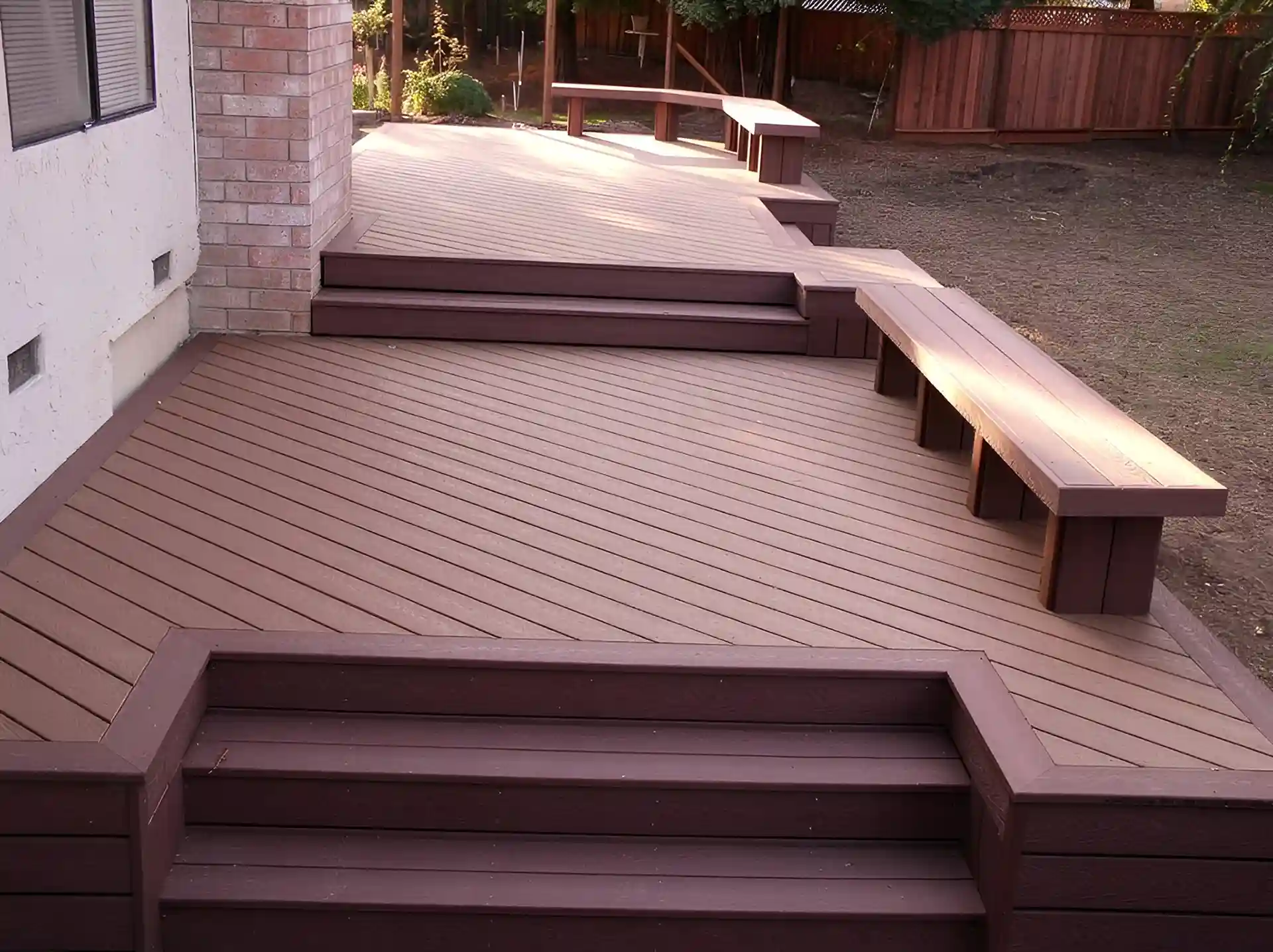
In a rush? Here’s a quick summary.
This guide covers everything homeowners need to know about composite deck stairs, including essential design configurations and the technical requirements for a safe build. We compare composite deck stairs vs wood to highlight long-term benefits and explain why professional composite deck stairs installation is critical for structural integrity. Readers will also find practical advice on composite deck stairs maintenance and how to choose a qualified composite stair builder in the Bay Area.
Why Choose Composite Deck Stairs?

When evaluating composite deck stairs vs. wood, the primary advantages center on how the materials perform in the Bay Area’s moisture and UV exposure. Unlike natural wood, which requires frequent chemical treatments, composite boards are designed for high-traffic areas and long-term exposure to the elements.
- Exceptional Durability and Longevity: Composite boards do not splinter or crack over time due to their protective capped outer layer. This structural resilience ensures that the stair treads remain stable and safe for heavy daily use.
- Low Maintenance Requirements: These stairs do not require sanding, staining, or sealing to maintain their structural integrity. Homeowners save significant time and money by avoiding the repetitive labor associated with traditional upkeep.
- Consistent Aesthetic Appeal: Manufacturers produce boards in a wide array of colors and grain patterns that remain consistent throughout the project. The material maintains its original look far longer than wood, which naturally grays within a few seasons.
Materials Used in Composite Deck Stairs
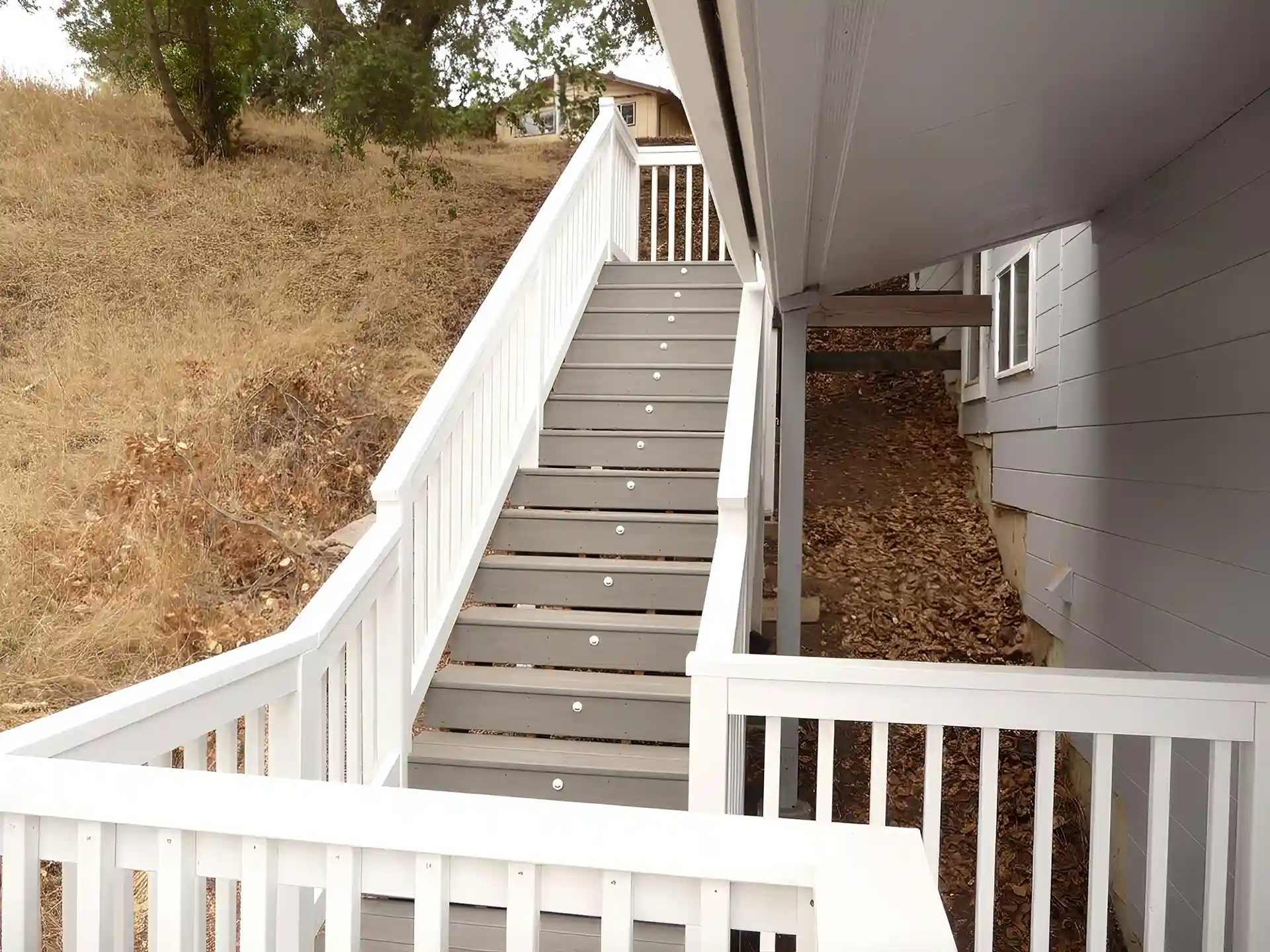
We utilize high-performance brands such as TimberTech and Trex to ensure every stair system meets our standards for strength and reliability. These manufacturers offer profiles designed to handle concentrated load concentrations on stair treads.
What is Composite Decking Made Of?
Composite decking consists of a mix of reclaimed wood sawdust and recycled plastic polymers. These materials are bonded together under high heat and pressure to create a dense, moisture-resistant core that outperforms standard pressure-treated lumber.
Types of Composite Decking for Stairs
Stair applications typically require solid-profile boards rather than grooved-edge boards to provide a finished look on the ends of the steps. We often use square-shoulder boards for the treads and matching riser boards to create a clean, professional appearance that hides the underlying frame.
Composite Stair Design Options
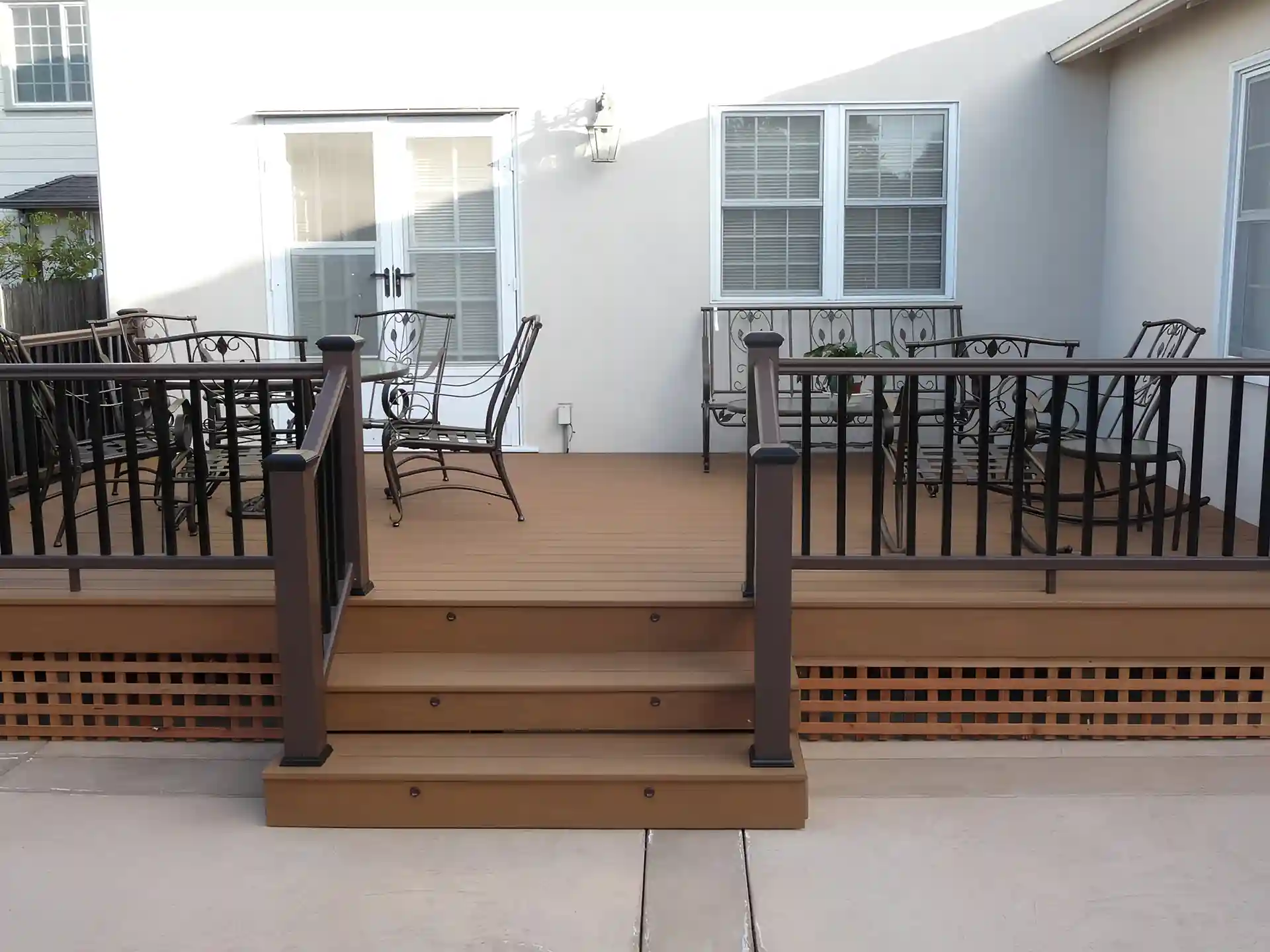
The layout of your stairs dictates the flow of your entire backyard and must adhere to strict California Building Code requirements. A thoughtful composite stair design evaluates your lot’s topography to provide the safest and most efficient access.
Straight Stairs
Straight stairs are the most common configuration and provide a direct path from the deck to the ground level. This design is straightforward to frame and works well for decks with a modest elevation change.
L-Shaped Stairs
L-shaped stairs incorporate a landing that allows the stairway to turn 90 degrees. This design breaks up a long flight of steps and provides a midpoint resting area, which is often required for decks exceeding a certain height.
Spiral Stairs
Spiral stairs utilize a central post and radiating treads to provide vertical access within a tiny footprint. While these are efficient in tight spaces, they are subject to specific code requirements on minimum tread width.
Multi-Level Stairs
Multi-level stairs connect various tiers of a deck, creating distinct zones for dining or lounging. This approach requires precise structural planning to ensure each transition is level and compliant with uniform riser height standards.
Composite Deck Stairs Railings and Accessories
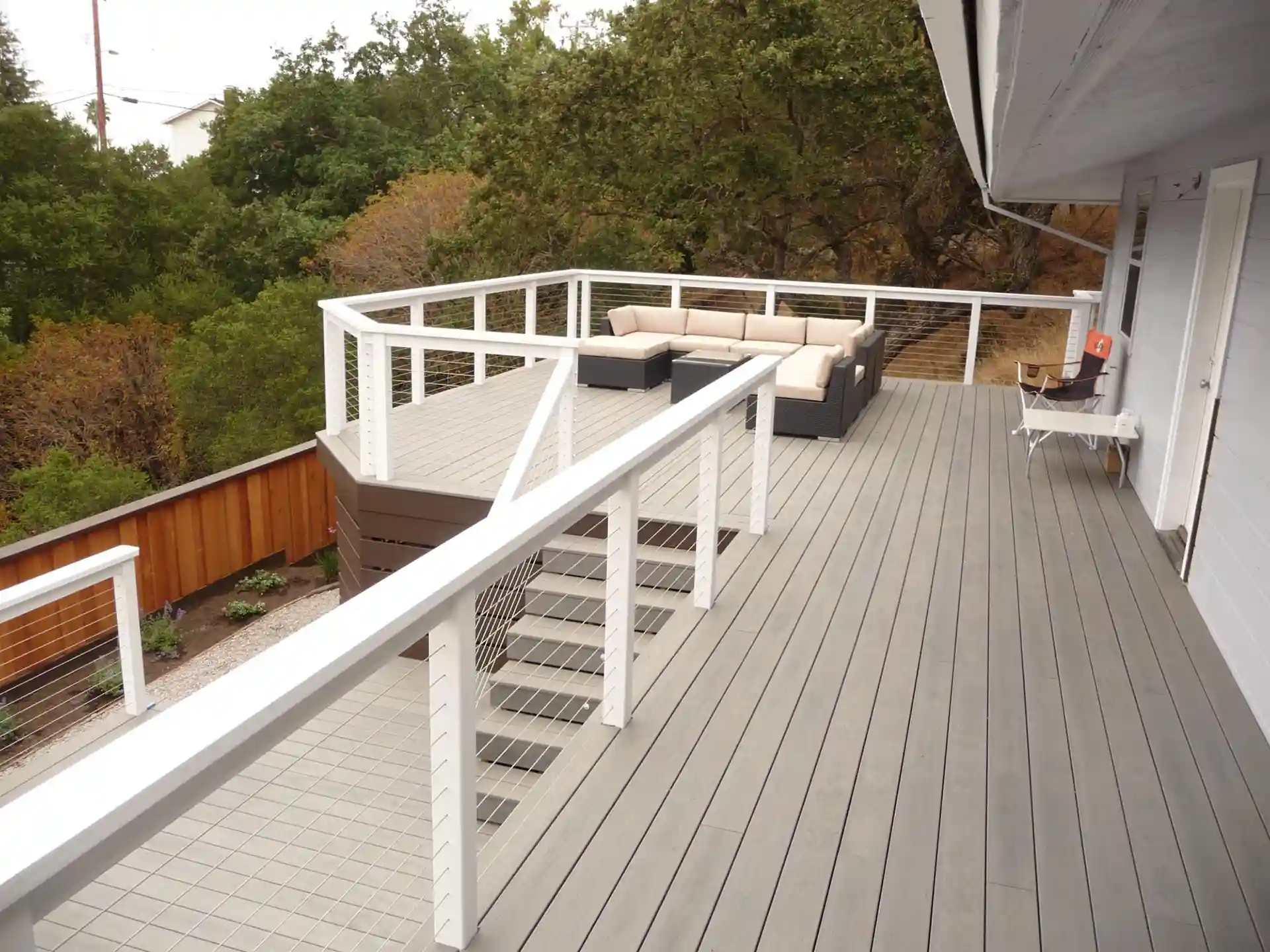
A safe stair system requires a robust railing that can withstand lateral force. We install code-compliant handrails that provide a continuous gripping surface from the top landing to the bottom step.
- Integrated LED Lighting: Low-voltage riser lights or post-cap lights enhance visibility in the evening, reducing the risk of trips and falls. These fixtures are recessed into the material to protect the wiring and provide a clean finish.
- Graspable Handrails: Building codes require a specific handrail profile that is easy to grip during a stumble. We install secondary handrails when the primary decorative railing is too wide for a secure hold.
Composite Deck Stairs Maintenance and Care
While composite materials are low-maintenance, regular attention helps preserve the surface finish and prevents the buildup of organic matter. Following a simple routine for composite deck stair maintenance helps ensure the stairs remain slip-resistant and visually appealing.
Cleaning Composite Deck Stairs
We recommend cleaning your stairs at least twice a year using a soft-bristle brush and mild soap. Regular rinsing prevents dirt from settling into the grain and keeps the surface from becoming slippery when wet.
Common Issues and How to Prevent Them
Most issues with composite stairs stem from external environmental factors rather than the material itself. Proactive care can prevent permanent surface damage.
- Prompt Stain Removal: Oil and grease from outdoor cooking should be cleaned immediately to prevent permanent discoloration. A household degreaser is usually sufficient to lift spots if applied before they set into the protective cap.
- Proper Debris Clearance: Keeping gaps between boards free of leaves and pine needles ensures proper drainage and airflow. Trapped organic matter can retain moisture against the frame, potentially causing localized rot in the wooden joists.
Environmental Impact of Composite Deck Stairs
Choosing composite materials reduces the demand for virgin timber and diverts significant amounts of plastic from landfills. Many of the brands we install are comprised of up to 95% recycled content, making them a sustainable choice for environmentally conscious homeowners. Furthermore, the lack of toxic stains and sealers means fewer chemicals are released into the local soil and groundwater over the life of the deck.
Common Problems with Composite Deck Stairs
Even high-quality materials can experience issues if environmental conditions are extreme or if the initial installation was flawed. Understanding these potential problems helps homeowners identify when it is time for a professional inspection.
Possible Issues Over Time
Darker composite colors can absorb significant heat in direct sunlight, which may lead to minor thermal expansion. While the material is designed to handle this, improper gapping during installation can cause boards to buckle or push against each other.
Moisture Buildup and Mold
Although the composite boards are resistant to rot, mold can still grow on their surface if dirt and moisture are allowed to accumulate. This is typically a surface-level issue that can be resolved through thorough cleaning, rather than a sign of structural failure.
Weak Spots or Loose Risers
Stairs are subject to high impact forces, which can eventually loosen the fasteners if they were not driven into solid blocking. We ensure all stair stringers are spaced no more than 12 inches on center to provide a rigid foundation that prevents the bouncing feel often found in DIY projects.
Professional vs. DIY Composite Deck Stairs Installation
Building deck stairs is one of the most technical aspects of construction, requiring precise mathematical calculations and strict adherence to safety codes. Professional composite deck stairs installation ensures that every riser is uniform in height, as even a small variance can create a significant trip hazard.
Our team handles the complex permitting process and ensures the structural footings are deep enough to prevent settling, which is a common failure point in DIY stair builds.
Why J. Perretti Builders is Qualified for Your Outdoor Project
As a dedicated composite stair builder, we bring decades of field experience to every project, focusing on the structural details that ensure your deck stairs remain safe and compliant with California Building Codes. Our team understands the nuances of Bay Area soil conditions and framing requirements, allowing us to build stair systems that last as long as the deck they serve.
Our process is rooted in accuracy and reliability, ensuring that every measurement is double-checked before the first board is cut. We prioritize structural integrity over shortcuts, providing homeowners with peace of mind that their outdoor space is built to the highest professional standards.
Schedule a Design Consultation with Us Today
If you are ready to upgrade your outdoor space with a durable, professionally installed composite stair system, we are here to help. Contact J. Perretti Builders today to schedule a design consultation and discuss your project needs.
Composite Deck Stairs FAQs
What are composite deck stairs made of?
Composite stairs are manufactured from a combination of recycled wood fibers and plastic polymers. This blend creates a dense, weather-resistant material that does not rot or warp like natural lumber.
How do composite deck stairs compare to wood stairs?
When comparing composite deck stairs vs wood, composite requires significantly less maintenance and does not splinter. While the initial cost is higher, they last much longer and require no regular staining.
Can composite deck stairs be customized?
Yes, a professional composite stair builder can customize the color, railing style, and lighting configurations to match your home’s architecture. The boards can also be cut into various shapes, including curved or multi-level designs.
Do composite deck stairs require a lot of maintenance?
No, but routine composite deck stairs maintenance, like occasional cleaning with soap and water, is recommended to remove surface dirt. You will never need to sand or apply chemical preservatives.
Are composite deck stairs safe?
When professional composite deck stairs installation is performed, these systems are extremely safe and slip-resistant. They must be built with proper riser heights and secure handrails to meet local safety codes.
Can I install composite deck stairs myself?
Stair construction is highly technical and requires precise calculations for safety. We recommend professional installation to avoid common structural errors and permit issues. Unsafe deck structures and deck stairs can lead to liability issues, but, more importantly, you do not want to risk family members or friends getting hurt because of poor composite deck stair installations.
How long do composite deck stairs last?
A high-quality composite stair system can last 25 to 30 years or more with proper care. Most manufacturers provide extensive warranties against fading, staining, and material defects.
